
3 min read
What size van do you need?
How to describe your load accurately so an operator can recommend a suitable vehicle and crew.
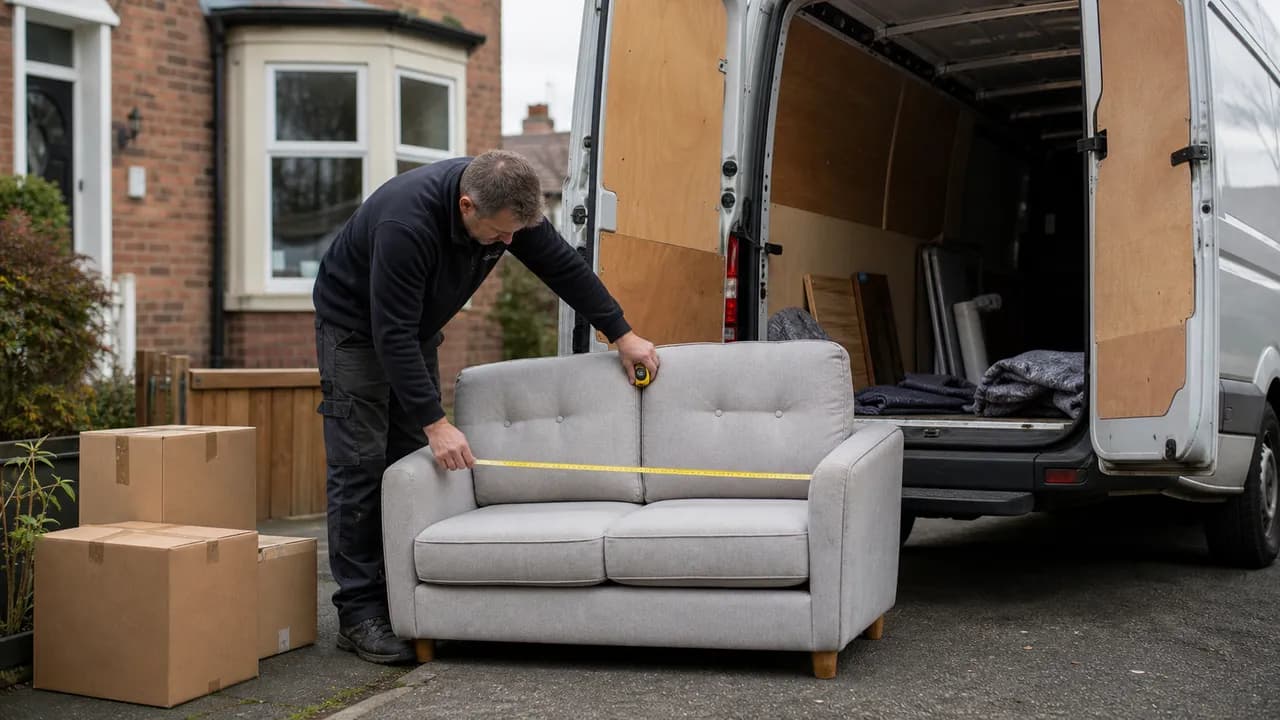
Describe the load, not the room count
Two studio flats can contain very different amounts of furniture, so room count is only a starting point. List the largest items first, then estimate the number of boxes, bags and smaller pieces. Photos give a provider a much clearer sense of shape and volume than labels such as small or medium move.
- Largest item dimensions
- Number of boxes and bags
- Furniture that can be dismantled
- Unusually heavy or fragile items
Think about shape as well as volume
A long sofa, tall wardrobe or large mattress can determine the vehicle needed even when the rest of the load is light. Tell the provider which pieces come apart and measure doorways if access looks tight. Loose bags and open containers are harder to stack securely than closed boxes.
The crew matters too
Van size and lifting help are separate decisions. A suitable vehicle does not remove the need for enough people to handle stairs, bulky furniture or a long carry. Be clear about whether you can help and whether another person will be available at either end.
If timing is important, mention it early. A larger vehicle may reduce repeat journeys, while extra help may make loading and unloading more practical. The provider can explain the setup they believe fits the job.
Let the operator confirm the fit
Avoid choosing a vehicle from a generic capacity chart alone. Vehicle interiors and load shapes vary, and safe loading needs usable space around the items. Share your inventory, measurements and photos, then ask the operator to confirm their proposed van before you agree the job.
Recheck when the inventory changes
A few late additions can make a bigger difference than they appear to. Garden furniture, bicycles, plants, mirrors and loose bags often occupy awkward gaps and may not stack like uniform boxes. If you sell, add or replace a large item after the first conversation, send an updated list or photo rather than waiting until collection.
The same applies when furniture cannot be dismantled as expected. Tell the operator which measurements changed and let them decide whether the original plan still works. A timely update may prevent a second journey, a vehicle change or an avoidable delay at the kerb, especially when access or parking time is limited.